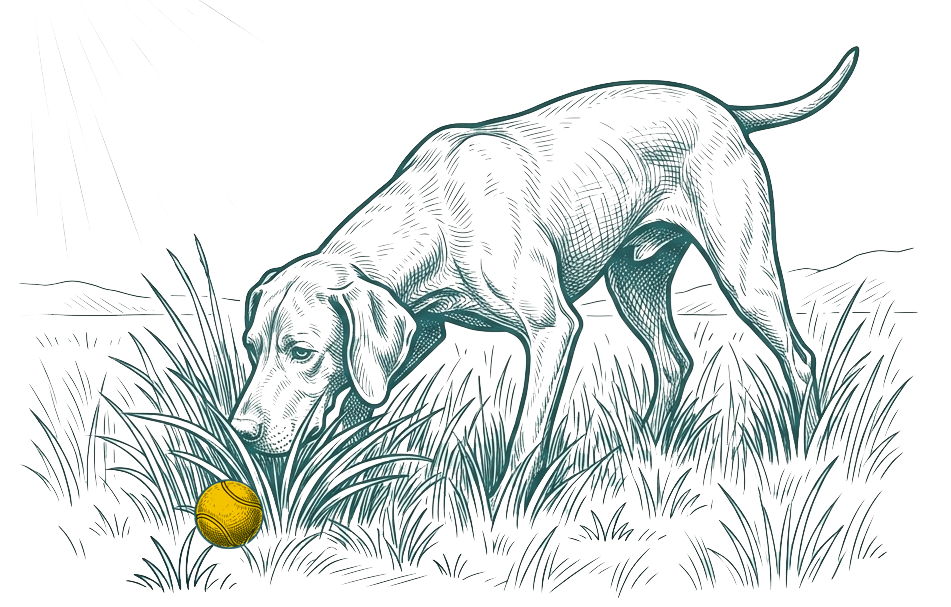
As loving dog owners, we tend to track our dogs' fitness through simple metrics: how fast they run, how far they march on their daily walk, or how tired they seem after a game of fetch.
However, there is an invisible cornerstone of canine health that governs every single movement your dog makes.
It is called postural stability.
While it sounds like a complex clinical term, postural stability is simply your dog’s biological ability to achieve, maintain, and restore balance.
It functions as the body's internal anchor, keeping their center of mass safely balanced over their paws. From a sudden twist while catching a frisbee to simply standing still on a slick kitchen floor, postural stability is the foundation of lifelong mobility and injury prevention.
To understand how to protect your dog’s joints and keep them moving comfortably into their senior years, we have to look at the fascinating veterinary science behind how their body maintains balance—and why walking on flat surfaces is short-changing their health.
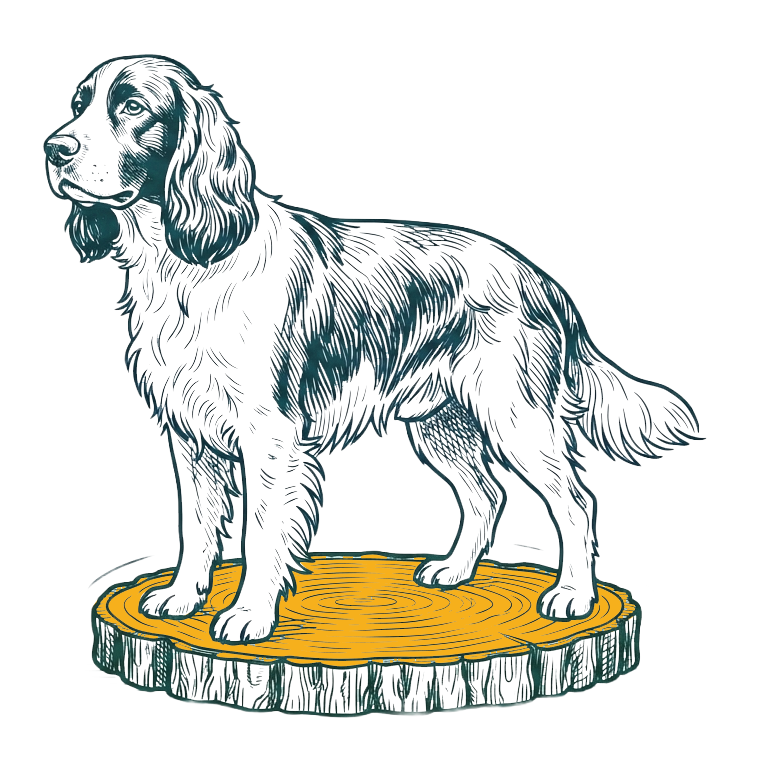 Postural stability is simply your dog’s biological ability to achieve, maintain, and restore balance & the foundation of lifelong mobility and injury prevention
The Neurological Science Behind the Balance
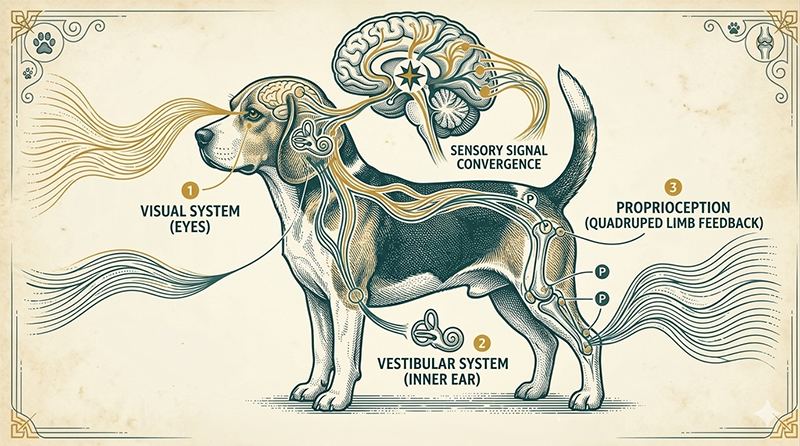
A dog’s brain doesn't maintain balance by magic. It relies on a rapid, three-part internal sensory system. While the inner ear (vestibular system) and the eyes (visual system) play major roles, quadrupeds rely most heavily on a "super sixth sense" called proprioception.
Proprioception is the nervous system’s internal mapping tool. Millions of tiny receptors hidden in your dog’s paw pads, joints, tendons, and muscles constantly send lightning-fast signals to the brain, detailing exactly where their limbs are in space.
When your dog walks exclusively on flat, uniform surfaces, their brain essentially goes on sensory autopilot. Because every single step lands at the exact same linear angle, the brain stops working to coordinate the limbs. The large "power muscles" (like the quadriceps) keep pushing forward, but the deep, internal stabiliser muscles along the spine, hips, and core completely switch off. Over time, this lack of variety causes those vital stabilising muscles to weaken, leaving your dog far more vulnerable to strains, slips, and joint wear-and-tear.
Exercising on natural terrain forces a dog's deep core muscles to wake up and work. When a dog navigates rolling slopes, steps over branches, or weaves through thick meadow grass, the ground is delightfully unpredictable. Their paws must land at slightly different angles with every single stride.
This simple shift triggers a massive chain reaction of health benefits:
This natural workout is scientifically proven as a significant health benefit—protecting their joints from injury and keeping them moving comfortably for longer.
Reclaiming the "Wild Workout" at Rural Tails Dog Park
Off-lead exploring in public spaces often comes with high anxiety, including loose livestock, wildlife distractions, poor recall fears, and unpredictable off-lead dogs.
This is exactly why Rural Tails Dog Exercise Park bridges the gap between total physical freedom and enclosed safety. Located quietly on Morkery Lane, between South Witham and Castle Bytham, this 2.4-acre private park was intentionally designed to celebrate the raw, authentic beauty of the natural English countryside.
The park is enclosed within a secure, 1.8-metre high-tensile fenced boundary. This means whether you are training a clumsy puppy to build lifelong coordination, shielding an active adult dog from sports injuries, or gently waking up the fading stabiliser muscles of a stiff senior dog, they can enjoy a therapeutic workout completely at their own pace, in total unhindered peace.
Give their core muscles a reason to wake up, and let them experience the true countryside as nature intended.